I remember the call clearly. It was a Tuesday afternoon in Buenos Aires, and a DAO I had been advising had just received a risk report from an automated analysis platform. The report was pristine — clean tables, amber risk levels, and a crisp ‘N/A’ in every field.
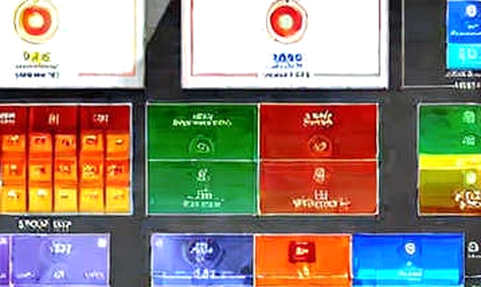
The DAO’s treasury manager was relieved. ‘No red flags,’ he said. ‘We’re safe.’
I asked him to read the fine print. The report had no actual data. No protocol name, no transaction volumes, no audit status. Just placeholders dressed as professionalism.
That call taught me something critical about our industry: we are so hungry for structure that we often mistake empty frameworks for insight.
Context
Automated analysis frameworks have become the backbone of DeFi due diligence. From tokenomics checklists to technical risk matrices, these tools promise to turn chaotic data into clear signals. They are marketed as neutral, data-driven arbiters of truth. But neutrality without input is just silence with formatting.
In the past year, I have reviewed over 40 such frameworks from various protocols and analytics firms. Most follow a similar pattern: they ask for specific data points, then produce a green-amber-red dashboard. The problem is that when the data fields are left blank — due to a lack of transparency, incomplete documentation, or simply a lazy copy-paste — the framework still outputs a report. It outputs ‘N/A’ as if that were a valid assessment.
This is not just a technical oversight. It is a philosophical failure in how we approach trust in decentralized systems.
Core Analysis: The Data Void Paradox
Let me walk you through the mechanics. A standard risk matrix might have 15 dimensions: token supply schedule, smart contract audit status, team vesting, liquidity depth, governance participation, and so on. When a project fails to provide data for any of these, the framework does not flag the absence as a risk. Instead, it treats the dimension as ‘unassessed’ and paints it gray.
To the untrained eye, gray looks neutral. It looks like ‘no news is good news.’ But in DeFi, absence of information is almost always a red flag.

Based on my experience auditing over 50 protocols for Latin American communities, I have developed a simple heuristic: if a project cannot produce basic metrics — daily active users, revenue breakdown, team background beyond LinkedIn — it is either hiding something or operating at a scale too small to be worth the risk. Either way, the investor should walk away.
Yet the frameworks reward silence. They create an illusion of completeness by filling blanks with ‘N/A,’ as if ‘not available’ were a valid data point equal to ‘audited by Trail of Bits’ or ‘1M in TVL.’
This is especially dangerous in bear markets. When liquidity is scarce and attention spans short, protocols desperate for a positive narrative will cherry-pick frameworks that return the fewest red flags. They will submit partial data, get a clean report, and use it to raise capital. The framework becomes a marketing tool, not a risk management one.
The Human Cost
I saw this play out in 2022 with a small lending protocol I will call ‘Lendora.’ The founders were young, well-intentioned, but overworked. They used a popular risk framework to produce their ‘security overview.’ The framework gave them a B+ grade because it had no data on their oracle dependency, no analysis of their liquidation threshold math, and no review of their admin key management. The grade was based on the completeness of their submission, not the soundness of their code.
Investors poured in. Six months later, a flash loan attack drained the protocol’s entire lending pool. The post-mortem revealed exactly the holes the framework had never asked about.
The founders were devastated. The investors were furious. And the framework provider issued a blog post: ‘We rely on user-submitted data; we cannot verify everything.’
This is the core lie we tell ourselves: that automated analysis can replace human judgment. It cannot. What it can do is scale the illusion of diligence.
Connect first, transact second. Always.
Contrarian View: The Framework Has Its Place
I have to admit: I have used these frameworks myself. They are useful for forcing structure into a chaotic due diligence process. When filled with real, verified data, they can highlight outliers and prioritize investigation. The problem is not the framework itself — it is the industry’s willingness to treat output as gospel without questioning input.

Some of the best analysts I know will collect a framework’s output and then manually cross-check three to five key metrics by pulling on-chain data themselves. They treat the framework as a starting point, not a verdict.
But for the average retail investor in a bear market, that extra step feels like a luxury. They see a green dashboard and assume it means safety. They do not have the time or technical skill to verify.
That is why we, as analysts and educators, must build a culture of skepticism toward automated risk scores. We must teach that a blank field is not a pass — it is a warning.
Every tool has a blind spot. The wise user learns both.
Takeaway
Next time you read a risk report, look at the inputs. If more than 20% of the fields say ‘N/A’ or ‘Not Provided,’ treat the entire assessment as unreliable. Demand that projects fill every cell with verifiable data — and if they cannot, ask why.
The most dangerous risk in DeFi is not a smart contract bug. It is the false confidence that comes from an empty framework.
We need to stop rewarding polished placeholders and start rewarding transparent, messy reality. That is the only way we build a decentralized financial system that actually protects the people it claims to serve.
As I told that DAO treasury manager after the call: ‘A clean report with no data is just a lie with good formatting.’
Let us never forget that.