The news rippled through trading desks in Geneva and Seoul before it even reached the mainstream wire services. A Pentagon chief, Hegseth, stood at a podium and uttered the phrase that sent a shiver through the global risk apparatus: the United States 'may use military force' in the Strait of Hormuz. In the crypto world, this is not just a geopolitical headline. It is a systemic risk event that re-prices everything from energy-backed stablecoins to the viability of proof-of-stake networks in the Middle East. But as I delved into the mechanics of the statement, the operational realities of the US Navy, and the A2/AD strategies of the Iranian Revolutionary Guard Corps Navy, I realized that the market is focusing on the wrong trigger. This isn't a story about oil; it's a story about latency, trust, and the physical grid that still powers the digital frontier.
The Pentagon's "maybe" is a masterclass in brinkmanship. It is a costly signal designed to project resolve while preserving the diplomatic flexibility to walk back from the abyss. But in the world of high-frequency trading, where a news algorithm decodes a Defense Department press release faster than a human eye can blink, a "maybe" is a binary. It either triggers a risk-off cascade or a relief rally. The market doesn't have the luxury of reading the footnotes. It just sees the trigger. This is the first layer of the narrative I want to map. The second layer is the physical reality of the Strait itself—a 33-kilometer-wide throat through which 21 million barrels of crude oil flow daily. If that throat closes, the world's data centers, industrial supply chains, and, critically, the energy-intensive process of securing blockchain networks, will feel the pinch.
My analysis of this event is not about the path to war. It is about the path to a new kind of scarcity. The Strait of Hormuz is not just a maritime chokepoint; it is a chokepoint for the very narrative of globalization. And in 2026, the crypto market is the most sensitive instrument we have for measuring the health of that narrative. So, let's look past the standard "oil price surge" commentary and examine the systemic vulnerabilities that the Pentagon's own strategic ambiguity reveals about the world we have built.
The Latency of Power and the Power of Latency
The first thing I notice in the report is the fundamental asymmetry between US power projection and the physical constraints of the Strait. The US Navy's Fifth Fleet, based in Bahrain, is the most advanced naval force in history. Aircraft carriers, Aegis-equipped destroyers, and nuclear submarines provide a level of destructive capacity that Iran cannot match in open battle. But the report correctly identifies the elephant in the room: the Strait's narrow geography nullifies the US's maneuver advantage. Iran's entire A2/AD strategy is built on this—the use of shore-based anti-ship missiles, swarm boats, and, most critically, thousands of mines that can be laid within hours.
This is where my "Systemic Risk Cartographer" mindset kicks in. In a traditional market, you would look at this and see a short-term risk to energy prices. In the crypto market, I see a narrative of a "blocked grid." A minefield is not just a physical obstacle; it is a code that broadcasts a message of uncertainty. It forces the market to re-evaluate the cost of carrying any asset that depends on the smooth flow of global trade. And what asset doesn't depend on that? The price of a barrel of Brent is the fee for the energy grid, but the price of a megawatt for a mining rig is a direct derivative of that same grid. The US military's ability to "clear" the mines is a function of time. The market's ability to price the risk of a prolonged blockage is a function of confidence. In the absence of certainty, the market takes the path of highest entropy: it buys the US Dollar, and it sells risk. It sells Bitcoin initially, only to realize, as we've seen in past crises, that Bitcoin is sometimes the only asset that can't be printed into oblivion.
But let's look deeper at the signaling. The report correctly notes that Hegseth's statement is a "costly signal." The fact that the Pentagon is publicly saying "might" is a deliberate act to increase the pressure on Iran. It's a form of brinkmanship. In my line of work, we call this a "narrative squeeze." You're not just threatening to fight; you're threatening to change the story of the region. The story of the region for the last few decades has been one of economic interdependence, where the West ensures the flow of energy, and the Gulf states recycle the petrodollars. A military threat disrupts that narrative. It introduces a "block in the chain."
The Ethereum of the Gulf? Or a Proof-of-Stake in a minefield?
I've been following the modular blockchain thesis closely since 2022. The bear market was a gift for those who wanted to understand infrastructure without the noise of the price tickers. In that context, the Strait of Hormuz becomes a profound metaphor. The strait is the ultimate "data availability layer" for the global physical economy. It's the DA layer that samples the energy data and broadcasts it to the world. If that layer is compromised, the entire "application layer"—the global supply chain—freezes.
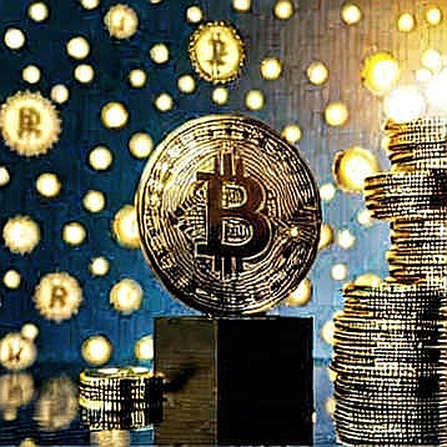
Now, let's pivot to the contrarian angle that I think most analysts are missing. The market is bracing for a surge in oil prices, and it's treating this as a bearish factor for crypto. But I see a different cause-and-effect. In a crisis where the physical grid is compromised, the value of a permissionless, decentralized alternative becomes more apparent. The recent Bitcoin ETF approval was a major step toward institutional adoption, but it also tethered Bitcoin to the traditional financial system—the very system that is vulnerable to the systemic risk of a Hormuz closure. When the stock market tanks, the ETF might bleed. But the underlying asset, Bitcoin, is the only asset that is not a liability of anyone else. It is a self-contained network.
My "Contrarian Truth Seeker" nature pushes me to say this: The Pentagon's threat to use force in the Strait is the most powerful marketing campaign for Bitcoin that we've seen in years. Why? Because it highlights the trustlessness of Bitcoin's consensus. When the world's largest military is threatening to secure a physical chokepoint, the story is all about trust in a third party to keep the doors open. Bitcoin is the asset that says, "I don't trust the third party; I trust the math."
This doesn't mean the price will pump. It means the narrative shifts. A 45-year-old analyst like me remembers the 2020 DeFi Summer and the 2022 bear market. I remember how narratives can lag or lead price. This Hormuz crisis is a narrative that will slowly feed into the institutional thesis. It's not a "pump" event; it's an education event.
The Systemic Risk of the "Maybe"
Let me be more precise about the systemic risks. The report correctly identifies the "miscalculation risk." Iran might read the "might" as a bluff. That's the core problem. In a world of high-frequency trading, the "might" is a gamma of risk. The market is long volatility on this news. It's not just about oil; it's about the entire "risk parity" algorithm that sees a geopolitical conflict and automatically reduces exposure to all asset classes that have a correlation with global GDP growth. Crypto is not immune to this, even though its fundamental thesis is anti-correlation.
The "cascade" effect is a concern. I've mapped this out in my previous work on DeFi. It's a cascade of contagion. A military clash in the Strait will first hit the oil futures. That will hit the equity of shipping companies and airlines. That will hit the consumer confidence in the West, and that will hit the tech sector's stock. The BTC spot ETF will then see a major outflow. This isn't a crypto-specific flaw; it's a systemic risk of the bridge between the crypto and the tradfi. The bridge was built for the sake of access, but it also built a pipeline for risk.
Regulation as a Fog of War
I have a specific opinion about regulation, and it's relevant here. The SEC's approach to crypto is regulation by enforcement. It's a "just wait and see" attitude that withholds the clear rules. In the context of Hormuz, this becomes even more dangerous. We have a major geopolitical event that is causing systemic risk, but we are operating in a regulatory environment that is still trying to decide if a token is a security or a commodity. This lack of clarity is a fog of war for the market. It's a fog that prevents capital from moving into the assets that might provide a hedge against the traditional system.
If the US military is the "backend" that secures the global economy, then the SEC is the "consensus mechanism" that defines the rules of the game. When the backend is under threat, the consensus mechanism needs to be clear. It isn't. This will exacerbate the "flight to safety," but it will also cause a "flight to quality" in the crypto world—a flight to Bitcoin, which has a clear regulatory status as a commodity.
The Digital Totem of the Gulf States
Let me look at the GCC countries for a moment. The report mentions that the GCC members are not united. Oman and Qatar want a dialogue with Iran; Saudi Arabia, UAE, and Bahrain want containment. In my "ethnographer" mode, I see this as a breakdown of a tribal narrative. The Gulf states have built their entire social contract on the stable flow of oil and the protection of the US umbrella. A military conflict threatens that contract. It forces them to "ape in" or "rug pull" from a particular side.
For the crypto market, this means we might see a bifurcation in the Middle East. The UAE is rapidly positioning itself as a crypto-friendly jurisdiction. It wants to be the "safest harbor" for digital assets. If the conflict is contained, the UAE's stable, low-tax, high-security environment becomes even more attractive as a physical backing for the digital assets. But if the conflict escalates, the UAE's proximity to the Strait is a risk factor. The "narrative" of a safe haven is always a matter of geography.
The Takeaway: The Next Narrative
So, what is the next narrative? The source report says the most likely direction is "controlled escalation." That's a diplomatic term. In the crypto market, this means "high volatility." The market will not wait for the "certainty" of a war; it will price the "uncertainty" of the "maybe." I expect to see the VIX (volatility index) spike. I expect the gold price to go up. And I expect a new phase of "energy security" tokens or projects that are directly tied to the energy sector.

But my deeper takeaway is about the latency of trust. The Strait of Hormuz is a physical chokepoint that is a narrative chokepoint. Every day the threat persists, the world's digital systems will be forced to calculate a new "risk premium." This premium will be in the price of the energy and the price of the security of the data. For the crypto industry, this is a wake-up call. We are not just a digital asset; we are a physical infrastructure that depends on the physical world. The "code" is not the end of the story; the "culture" and the "power" are the input.
The question I'm left with is not about the military's capability. It's about the market's imagination. The Pentagon is saying "maybe" to create a fog. The smart money is building a p to see through that fog. The fog is a narrative, and the narrative is the game.
The world is a grid of contradictions. The Strait of Hormuz is the most valuable piece of "unregulated" territory in the world. The US Navy is the "validator" of that grid. When the validator is compromised, the consensus fails. And in that failure, we find the true value of a decentralized protocol. It's the only thing that doesn't need a validator to remain true. Code speaks, but culture listens. And in times of war, culture listens to the promise of the code. The promise is the "might" of the US Navy is a "maybe," but the "proof" of the Bitcoin network is an "is." That is the ultimate counter-narrative to the fog of war.
The real signal to track is not just the oil price, but the network hash rate. If the hashrate remains stable, it means the underlying energy is still secure. If the hashrate starts to waver, it means the grid is in trouble. This is the most sensitive sensor we have for the health of the physical world. The Pentagon's "maybe" is a narrative that can change the physical world. The code is the truth that the narrative cannot touch.
I don't have a crystal ball. I have a risk map. And on that map, the "maybe" is a red line. The next few weeks will be the "trading range" of the geopolitical future. We need to watch for the "fakeout" of a diplomatic solution, or the "breakdown" of a military clash. For the crypto native, this is not a time to ape in or to rug pull. It is a time to observe the cultural semiotics of a world that is holding its breath. The market is an anthropology of the human fear. And in the Strait of Hormuz, we have a perfect sample size of that fear. The only question is whether the "old power" can hold the line, or the "new power" will have to build a new one. As for me, I am watching the energy, not the barrels. I am watching the flow of the digital energy, because it's the only flow that can't be mined by an adversary. It is the flow of the truth. And that, my friends, is the only "safe haven" in the storm.