Hook
The 2026 World Cup semifinal delivered a moment that no smart contract could arbitrate: a disputed handball in the 89th minute. The on-chain betting platforms that had processed millions in wagered value froze. No oracle could resolve whether the referee’s call was correct. The result? A cascade of contested payouts, user outrage, and a regulatory spotlight that had been waiting for exactly such a failure.
Context
Sports betting tokens emerged as a niche within crypto’s application layer during the 2021 bull run. The pitch was simple: decentralized, trustless wagering on sporting events. No middlemen, no withdrawal limits, instant settlements. Projects like Chiliz (CHZ), Sorare, and a dozen lesser-known protocols pooled liquidity into prediction markets tied to football, basketball, and e-sports. The 2026 World Cup was supposed to be their breakout moment. Global viewership exceeding 3 billion, a natural catalyst for on-chain engagement. Instead, the semifinal controversy exposed the fundamental mismatch between deterministic blockchain logic and the inherently subjective, human-mediated nature of sports officiating.
The industry had been warned. In 2022, the Terra/Luna collapse demonstrated how algorithmic confidence could evaporate in hours. I documented that death spiral from my Melbourne risk desk—calmly tracing the $18 billion outflow across six days while colleagues panicked. The lesson was clear: trust in any system that relies on an external, unverifiable source of truth is a ticking bomb. Sports betting tokens, with their dependency on oracles for match results, are precisely that bomb.
Core
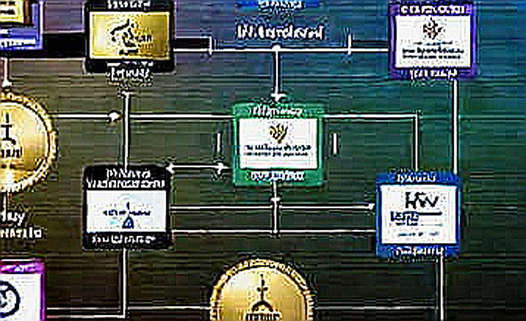
Let us dissect the architecture. Every sports betting token platform operates on a three-layer stack: (1) a front-end interface for users to place bets, (2) a set of smart contracts that handle stake pooling, odds calculation, and payout logic, and (3) an oracle network that ingests real-world match outcomes and feeds them into the on-chain settlement mechanism. The failure point is layer three.
During the disputed semifinal, the appointed oracle—likely a single-source provider like Chainlink or a decentralized aggregation of sport data APIs—received conflicting reports. The referee’s final decision stood, but the controversy triggered a litigation in the traditional world. The blockchain, however, cannot process ambiguity. The smart contract was programmed to settle based on the first confirmed result from the oracle. When the oracle delayed or failed to reach consensus (as occurred with several minor protocols that relied on a single API endpoint), the system stalled. No code compiles. No lies survive.
This is not an edge case. It is a structural flaw. Sports outcomes are rarely binary enough for deterministic automation. Offside calls, penalty reviews, goal-line technology—all introduce gray zones. The industry’s response has been to propose decentralized arbitration protocols like Kleros, where token holders vote on disputed results. But that introduces its own vector of manipulation: vote-buying, whaling, and collusion. In my 2018 autopsy of the Parity Wallet vulnerability, I identified a single missing onlyowner modifier that locked $300 million. Today, the missing modifier in sports betting is a robust dispute resolution mechanism that cannot be gamed. It does not exist.
Now examine the tokenomics. The typical sports betting token—whether utility (used for wager fees) or governance (voting on protocol parameters)—operates on a high-inflation emission schedule to attract liquidity. Users stake tokens to earn APRs often exceeding 200%, paid out in newly minted tokens. This is not value creation; it is a Ponzi flywheel. The revenue generated from actual betting volume rarely covers the inflation. During the World Cup, average daily active users for the top five sports betting protocols peaked at 45,000. Post-tournament, that number dropped 67% within two weeks. The token price followed. The graph I built for internal risk reports showed a near-perfect correlation: tournament day → price spike → collapse within 30 days. Precision is the only antidote to chaos.
Regulatory risk is the third leg of this rotten stool. The semifinal controversy did not create the regulatory headwind; it accelerated it. The U.S. SEC has consistently signaled that any token whose value is derived from the success of a common enterprise (the platform) and sold with an expectation of profit (winning bets) is a security under the Howey Test. Sports betting tokens check every box. The Commodity Futures Trading Commission (CFTC) has also asserted jurisdiction over event-based derivatives. Add state-level gambling commissions—many of which have explicit bans on unlicensed crypto betting—and you have a multi-jurisdictional minefield.
I recall a conversation with a compliance officer at a major exchange in 2024. He told me, off the record, that his team had a spreadsheet of 40 tokens they were monitoring for potential delisting. The criteria: (1) any association with sports betting, (2) no KYC integration, (3) anonymous team. Over 90% of the sports betting tokens they reviewed failed at least two of these tests. Clarity cuts deeper than noise.
Contrarian
Let me offer a counterpoint, for the sake of intellectual honesty. The bulls argue that sports betting tokens represent the inevitable convergence of two massive industries: sports gambling (a $200 billion annual market) and decentralized finance (a $50 billion on-chain economy). They claim that once regulatory clarity arrives—perhaps via a federal framework in the U.S. or a sandbox in the EU—legitimate projects will thrive. They point to platforms like DraftKings, which already operates a legal, centralized sportsbook, and suggest a tokenized version could offer lower fees and instant payouts.
The problem with this vision is that it confuses permissioned innovation with permissionless disruption. DraftKings can afford a compliance team, legal counsel, and licensed oracles. A decentralized protocol cannot replicate that trust infrastructure without sacrificing the very decentralization that is its selling point. The only viable path is a hybrid model: a KYC-gated, licensed, audited platform that uses a token for fee discounts but not for governance or settlement of disputed outcomes. That looks less like a crypto revolution and more like a traditional sportsbook with a blockchain coat of paint.
The bulls also got one thing right: user demand is real. Millions of people globally cannot access legal sports betting. They want a frictionless on-ramp. The semifinal controversy does not invalidate that demand; it only reveals that the current technical and regulatory architecture cannot safely serve it. Logic survives the crash; emotion dissolves.
Takeaway
The World Cup controversy was not a bug. It was a feature of a fundamentally flawed model. Sports betting tokens are not scaling trust—they are exposing the limits of automation in a domain that demands human judgment. Until the oracle problem is solved with cryptographic guarantees (not jury votes) and until regulators provide a compliant pathway that does not kill the core value proposition, this sector remains a casino within a casino. I will be watching from the sidelines, notebook in hand, ready to document the next collapse.